
Showing all 14 resultsSorted by latest




Showing all 14 resultsSorted by latest
The philatelic history of the Saar region—variously known as the Saargebiet (Saar Territory) or Saarland—is one of the most turbulent in Europe. Located on the border between Germany and France, this coal- and steel-rich basin was repeatedly detached from Germany after global conflicts, producing short-lived, highly collectible postal eras before being reunited with the mainland.
For collectors, the period between 1920 and 1956 is split into two distinct chapters, bookended by historical plebiscites (public votes).
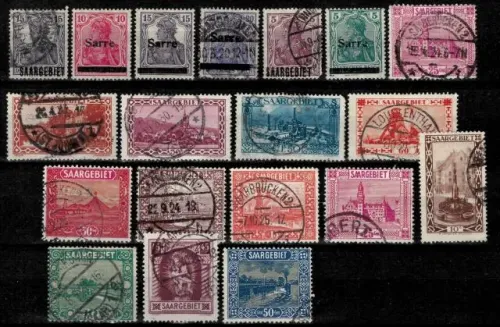
The Early Overprints (1920–1921)
Because the newly formed territory needed stamps immediately, the postal administration took existing German Empire (Germania) and Bavarian stamps and heavily modified them:
“Sarre” Overprints: The first issues simply had the word “Sarre” stamped across the top or bottom of German stamps, often with a heavy black bar striking out the “Deutsches Reich” text.
“Saargebiet” Inscriptions: Shortly after, stamps were overprinted directly with “Saargebiet”. Collectors closely analyze these issues for overprint varieties, inverted text, and spacing errors, which can significantly alter their value.
The Industrial Pictures (1921–1934)
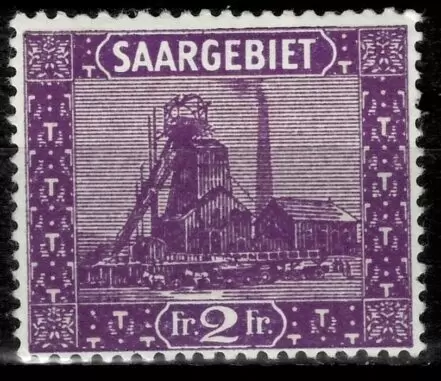
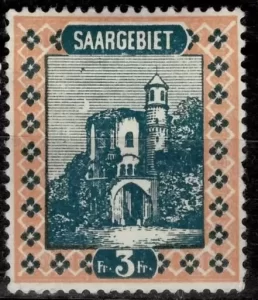
By 1921, the territory began printing its own highly detailed, beautiful definitive stamps. Reflecting the region’s identity, these designs moved away from monarchs and instead proudly displayed its industrial heartland:
Steel mills, coal mine pitheads (such as the Burbach works).
Local river valleys, railways, and sweeping views of Saarbrücken.
Currency Switch: Initially denominated in German Marks, the hyperinflation crisis in Germany forced the Saar to switch its postal currency to French Centimes and Francs in 1921.
The “Saarland” Era (1950–1956)
During the 1950s, the name printed on the stamps shifted cleanly from “Saar” to Saarland.
The Olympic Issues: Saarland actually operated as an independent nation in sports, sending its own team to the 1952 Helsinki Summer Olympics. The stamps issued to commemorate this are a favorite among thematic sports collectors.
High Production Quality: Printed primarily by the French State Printing Office, these stamps are famous among philatelists for their gorgeous, fine-line steel engravings and deep, rich color palettes.
The Second Return (1956–1959)
In late 1955, the populace voted in another referendum, rejecting a plan to make Saarland a neutral “European territory” and choosing instead to join West Germany (BRD).
On January 1, 1957, Saarland politically rejoined West Germany.
For a brief transitional phase lasting until 1959, special “Saar” stamps were issued that looked identical to West German stamps but were denominated in French Francs.