
Showing all 19 resultsSorted by latest

Showing all 19 resultsSorted by latest
The philatelic history of Spain and its vast overseas empire spans over a century of profound political upheaval. Spain introduced adhesive postage stamps on January 1, 1850, and quickly expanded the system to its far-flung colonies across the Caribbean, the Pacific, and Africa.
Because Spain cycled rapidly through a monarchy, a republic, a civil war, and a dictatorship, its stamps present an incredibly diverse canvas of iconography, currency revaluations, and colonial overprints.
Spain: 1851 2 Reales (Famous blue color error). Source: Wikimedia Commons / File:Queen Isabella II (2 reales stamp with colour error) – The …
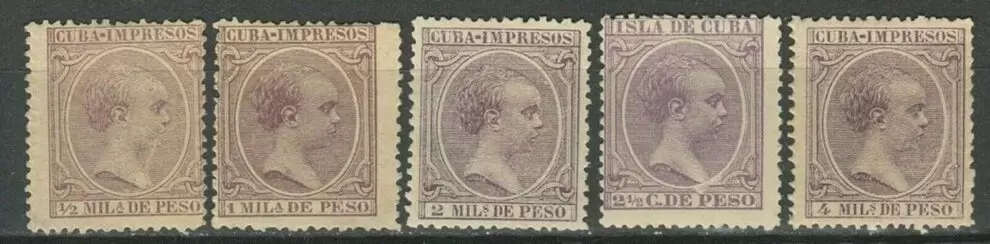
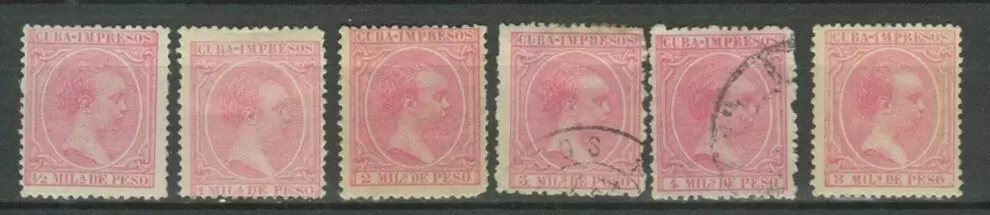
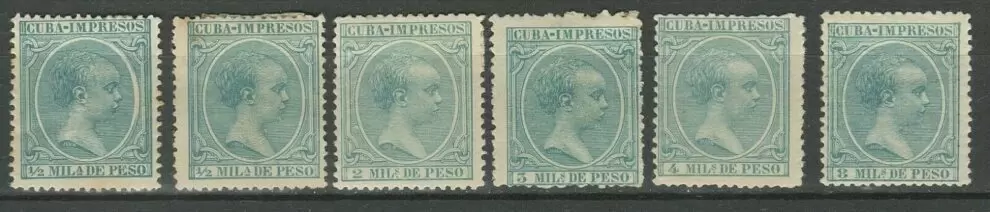
Colonies: 1896 Cuba 5 Centavos de Peso. Source: todocoleccion / 1896-292 cuba spain alfonso xiii 1896 5c mnh-mh – Buy Stamps of …
1. Mainland Spain: The Core Eras
Mainland Spanish stamps are traditionally cataloged by the drastic political shifts that reshaped the government in Madrid.
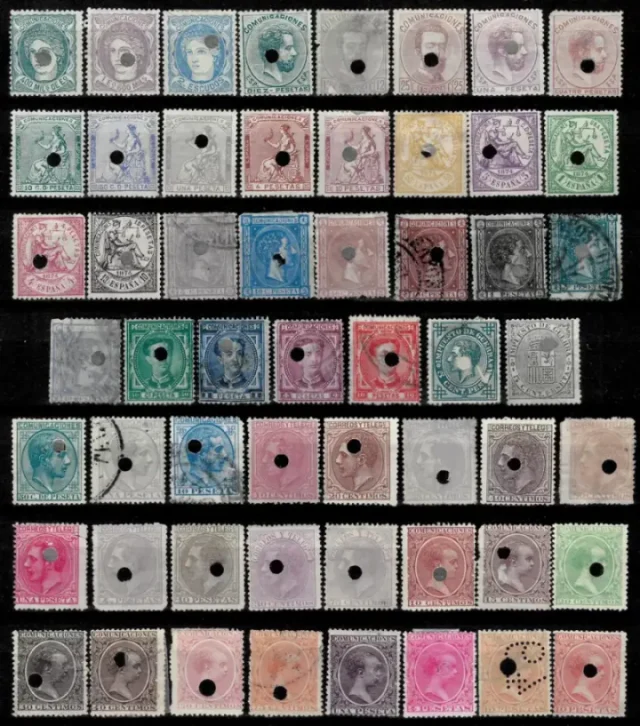
The Isabella II Era (1850–1868): The first 18 years of Spanish philately were dominated by right-facing portraits of Queen Isabella II. These early issues were imperforate, printed on distinct paper stocks, and denominated in Reales or Cuartos.
The Revolutionary & Republic Transitions (1868–1875): Following Isabella’s exile, older stamps were overprinted with “Habilitado por la Nación” (Authorized by the Nation). Spain then briefly experimented with allegorical “Left-Facing Liberty” graphics and portraits of King Amadeo I.
The Alfonsine Restoration (1875–1931): Stability returned with King Alfonso XII and his son, Alfonso XIII. Alfonso XIII is unique because his stamps track his growth literally—progressing from a baby profile (the “Baby” or Pelón issue shown in the colonial example above) to a young boy, and finally an adult monarch.
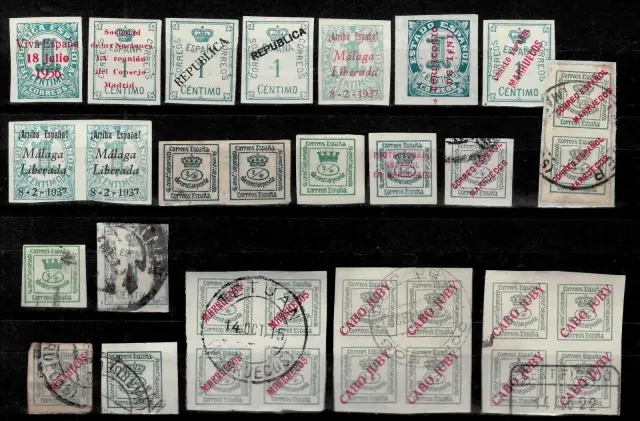
The Civil War Chaos (1936–1939): This is a highly complex area for collectors. Both the Republican government and Franco’s Nationalist forces issued their own stamps. Local towns across Spain produced thousands of unauthorized provisional surcharges, charity stamps, and propaganda issues.
2. The Spanish Colonies
Spain managed its colonial postal service by dividing its territories into distinct administrative groups, printing custom designs or overprinting existing stocks to match local currencies.
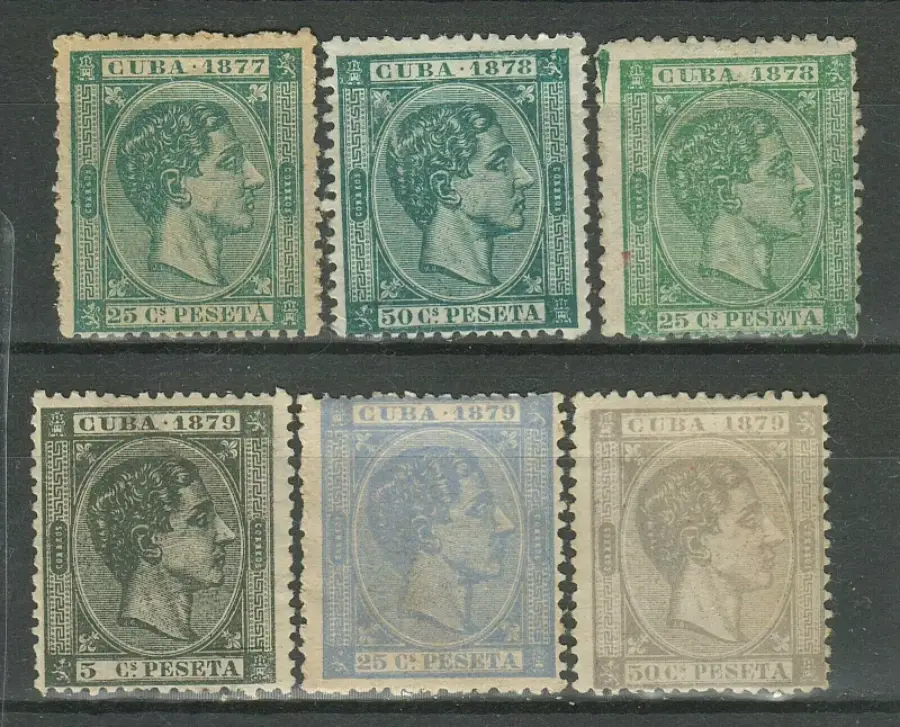
The Caribbean & Gulf (Cuba and Puerto Rico)
Until the Spanish-American War of 1898, Cuba and Puerto Rico shared many stamp designs.
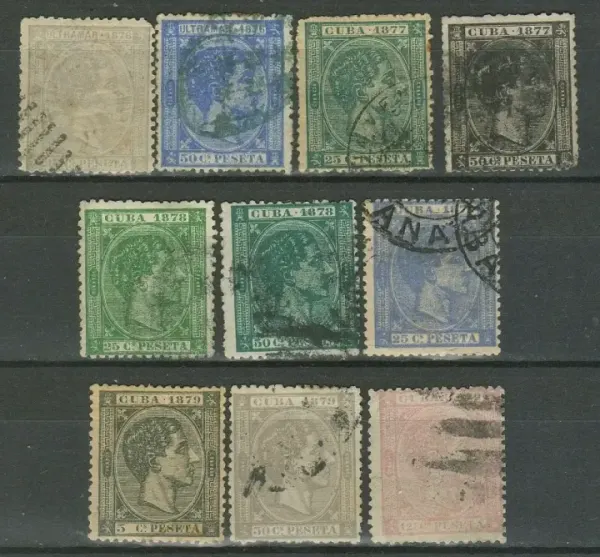
Early issues feature portraits of the Spanish monarch but are easily distinguished because they are inscribed “Ultramar” (Overseas) or explicitly labeled “Isla de Cuba” or “Puerto Rico”.
They utilized the colonial currency system (Pesos and Centavos de Peso).
The Pacific (The Philippines / Filipinas)
Spanish stamps for the Philippines began in 1854. Due to the immense shipping distance from Madrid, the local postal authorities frequently ran out of stamps, leading to hundreds of crude local overprints and surcharges applied directly in Manila.
The African Territories
Long after losing its American and Pacific colonies in 1898, Spain maintained a heavy postal footprint in Africa until the mid-20th century. These stamps are highly prized for their vibrant, exotic pictorial designs illustrating local wildlife, landscapes, and indigenous cultures:
Fernando Poo and Río Muni (later combined into Spanish Guinea / Equatorial Guinea).
Spanish Sahara (Sáhara Español).
Spanish Morocco (Marruecos).