
Showing 1–30 of 66 resultsSorted by latest




















Showing 1–30 of 66 resultsSorted by latest
The intersection of aviation and postage stamps created an entirely new, elite branch of philately known as aerophilately. Airmail was the high-tech breakthrough of the early 20th century. Because flying mail across oceans and continents was an incredibly dangerous, premium service, it required its own specialized stamps, higher face values, and unique postal routes.
For collectors, aviation stamps chronicle the entire timeline of human flight—from fragile biplanes and massive dirigibles to supersonic jets.
The Pioneers: Early US Airmail issues (1918–1923). Source: Mystic Stamp Company / C1-6 – 1918-23 First Airmail Stamps, Complete Set of 6 – Mystic …
The Airship Golden Age: 1930 US Graf Zeppelin flight cover. Source: Wikipedia / 1930 Graf Zeppelin stamps – Wikipedia
1. The Pioneer Airmail Era (1918–1920s)
The earliest aviation stamps were practical necessities, issued to pay the expensive surcharges required to send letters via early military and civilian biplanes.
The Curtiss JN-4 “Jenny”: The United States issued its first true airmail stamp in May 1918 to inaugurate the Washington-Philadelphia-New York route. The 24-cent carmine and blue stamp prominently featured the Curtiss Jenny biplane.
The French and German Lines: France and Germany aggressively expanded air routes after WWI to connect their empires. Early French airmail issues featured stylized allegorical figures soaring alongside biplanes, while Germany’s Weimar Republic released striking, minimalist graphic stamps showing stylized post horns with avian wings.
2. The Zeppelin Craze (1928–1937)
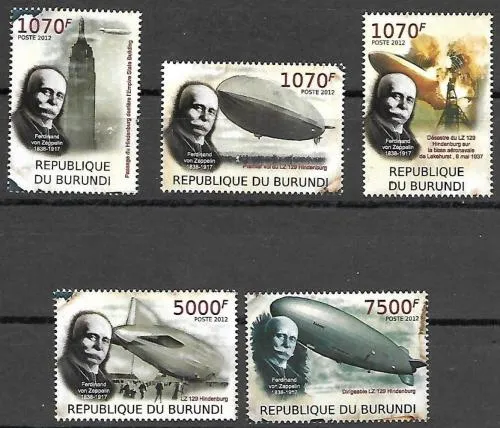
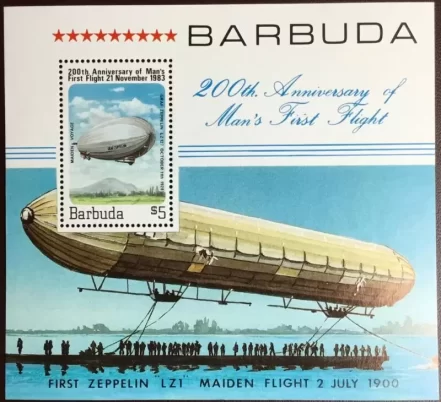
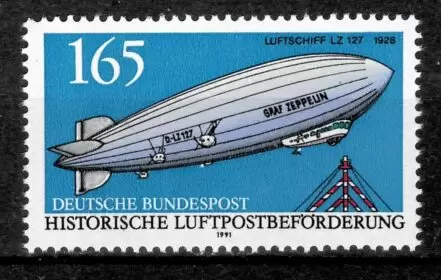
Before commercial airplanes could reliably cross the Atlantic, massive, hydrogen-filled rigid airships operated by the German Zeppelin Company dominated luxury global transit. Zeppelin mail is a massive, highly prized sub-field of aerophilately.
The 1930 US Graf Zeppelin Stamps: Issued specifically for the European-Pan American flight of the Graf Zeppelin airship, this set of three stamps (pictured on the cover above) is legendary. The face values ($0.65, $1.30, and $2.60) were astronomically high for the Great Depression era. Because few could afford them, most were unsold and destroyed, making them incredibly valuable today.
Global Zeppelin Cachets: Countries across South America, Europe, and the Soviet Union issued custom stamps for Zeppelin stopovers. Collectors track down complete envelopes (covers) that actually flew on these airships, which are verified by large, decorative ink stamps called cachets indicating the flight path.
3. The Commercial & Jet Age (1940s–Now)
Following WWII, aviation technology advanced exponentially, and stamps tracked every milestone.
The Clipper Ships: The United States and trans-Pacific routes were dominated by massive “flying boats” like the Pan American Clippers. Stamps from this era feature gorgeous, stylized artwork of these multi-propeller planes crossing the Pacific or bridging South America.
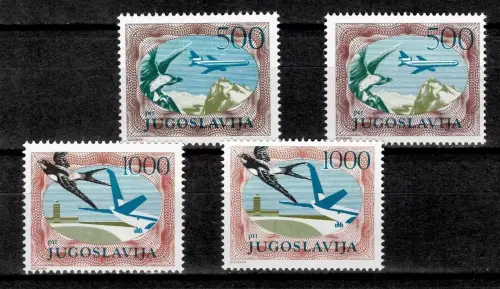
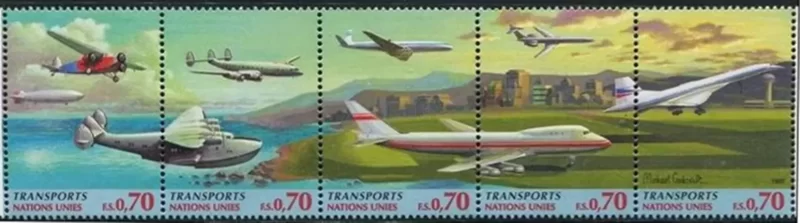
Supersonic Transit: The introduction of commercial jetliners like the Boeing 707 and, later, the supersonic Concorde sparked a wave of futuristic, mid-century modern stamp designs. France, Great Britain, and various Middle Eastern nations frequently featured the needle-nosed silhouette of the Concorde to signal national prestige.
The Ultimate Aviation Rarity: The Inverted Jenny
You cannot discuss aviation stamps without mentioning the world’s most famous printing error: the Inverted Jenny (1918).
Because the stamp was printed in two colors, sheets had to be fed into the printing press twice—once for the red border and once for the blue airplane. On one single sheet of 100 stamps, the airplane section was fed upside down. A collector named William T. Robey bought that exact sheet at a Washington, D.C. post office window for $24. Today, a single individual Inverted Jenny stamp can command well over a million dollars at auction.