
Showing all 3 resultsSorted by latest

Showing all 3 resultsSorted by latest
Memel postage stamps are a compact but very rich collecting area, and they sit at the crossroads of German, French, and Lithuanian postal history. The key period is 1920–1923, when the Memel Territory had its own overprinted and provisional issues before being absorbed into Lithuania.
Historical setting
After World War I, the Memel Territory was separated from Germany and placed under Allied administration, with French involvement in the postal system. In January 1923, Lithuania occupied the territory during the Klaipėda Revolt, and the region was later integrated into Lithuania’s postal system.
This political sequence is exactly why Memel philately is so interesting: each administrative change produced a new stamp phase.
Main stamp phases
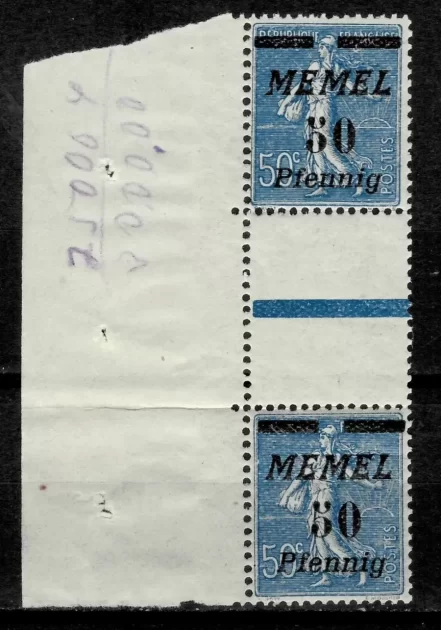
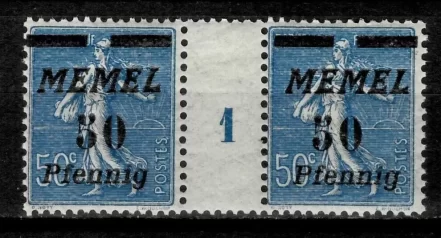
The earliest Memel stamps were overprints on German issues, including “Memel” or related territorial markings, starting in 1920. The territory then produced its own provisional and definitive issues during the French mandate period, often denominated in centimes and francs.
In 1923, Lithuanian control brought new overprints and transitional issues tied to the change in currency and administration. After that, Lithuanian stamps were used in the territory, and Memel ceased to exist as a separate philatelic entity.
Collecting appeal
Memel is prized for overprints, short-lived provisionals, and variety collecting, especially constant varieties and scarce transitional items. The early overprints and Lithuanian occupation issues are the most sought after, and errors or inverted overprints can be especially collectible.
For a collector, Memel is best approached as a specialized postal-history study rather than just a stamp set. Covers, cancellation types, and administrative usage can be just as important as the stamps themselves.
Relationship to Lithuania
Memel philately is often treated together with Lithuania because the territory became Klaipėda and was folded into Lithuanian postal history after 1923. Some catalogs list Memel separately for 1920–1923, then transition to Lithuanian issues for the later Klaipėda period.