
Showing all 7 resultsSorted by latest



Showing all 7 resultsSorted by latest
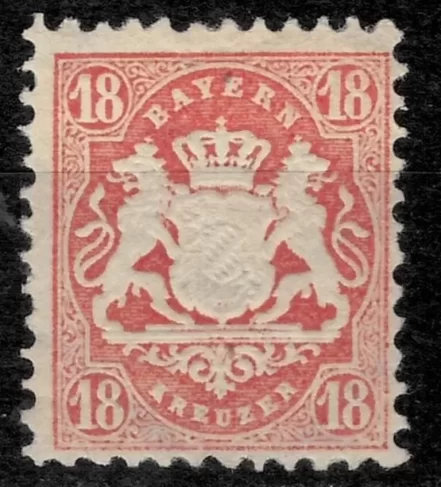
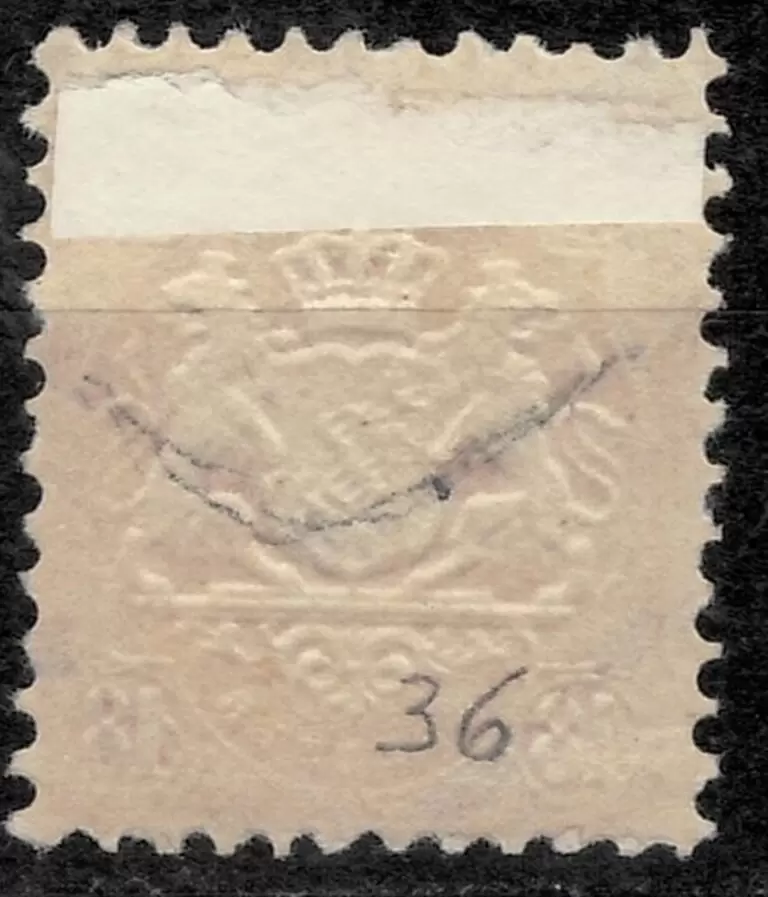
The postal history of the Kingdom of Bavaria between 1849 and 1920 is one of the most revered areas in philately. Even after the German Empire unified in 1871 under Prussian leadership, fiercely independent Bavaria retained its own postal autonomy (Postregal). It continued to design, print, and issue its own distinct stamps for more than 70 years, entirely separate from the rest of Germany, until the Weimar Republic centralized the mail system in 1920.1. The Dawn of German Philately (1849)On November 1, 1849, Bavaria made history by issuing the very first postage stamp in all of the German states. The One Kreuzer Black (Schwarzer Einser)Designed by Johann Peter Haseney, this square, typographic stamp features a large numeral “1” inside a highly detailed, geometric background lattice designed to prevent counterfeiting. Because it was printed in black ink on ordinary paper and used mostly for local circulars, many were discarded. Today, an authentic Schwarzer Einser is a premier German classic.2. The Era of the Numerals and Coats of Arms (1850 – 1911)For decades, Bavaria resisted placing the portrait of its monarchs on standard postage, preferring abstract symbols of state authority. The Silk Thread Issues (1850–1867): To defeat counterfeiters, Bavaria printed stamps on paper that had a continuous silk thread embedded vertically directly into the paper pulp. If you turn one of these early numeral stamps over, finding that intact silk thread is key to authenticity.The Embossed Coat of Arms (1867–1911): This long-running design shifted away from simple numerals to the detailed Bavarian coat of arms featuring the iconic rampant lions. These stamps utilized a distinct embossing technique, where the central shield is physically raised and textured against the paper.3. The 20th Century: Royal Portraits and OverprintsThe policy against using royal portraits finally broke in the 1911 jubilee year, leading to some of Bavaria’s most artistically striking stamps before political chaos changed everything.The Prince Regent Luitpold Jubilee (1911)To mark the 90th birthday of Prince Regent Luitpold (who ruled on behalf of the mentally ill King Otto), Bavaria released its first portrait stamps. Designed by the famous artist Fritz August von Kaulbach, these finely etched, elegant portraits are highly regarded for their classical beauty.The Ludwig III Era & WWI (1914–1918)When Ludwig III became the final King of Bavaria, a new definitive series featuring his profile was introduced in 1914—just as World War I erupted.4. The Turbulent End: Revolution to Integration (1918 – 1920)The collapse of the German Empire at the end of WWI brought a chaotic final chapter to Bavarian philately, creating a goldmine of overprints for collectors.YearPolitical EraStamp ActivityNov 1918People’s State of BavariaFollowing the overthrow of the monarchy, existing stocks of Ludwig III stamps were overprinted with “Volksstaat Bayern”.1919Free State of BavariaAfter the assassination of socialist leader Kurt Eisner, the stamps were overprinted again with “Freistaat Bayern”.April 1920The Final GoodbyeBavaria yielded its postal rights to the central Reichspost. Final definitive stamps were overprinted with “Deutsches Reich” before Bavarian issues were phased out forever.