
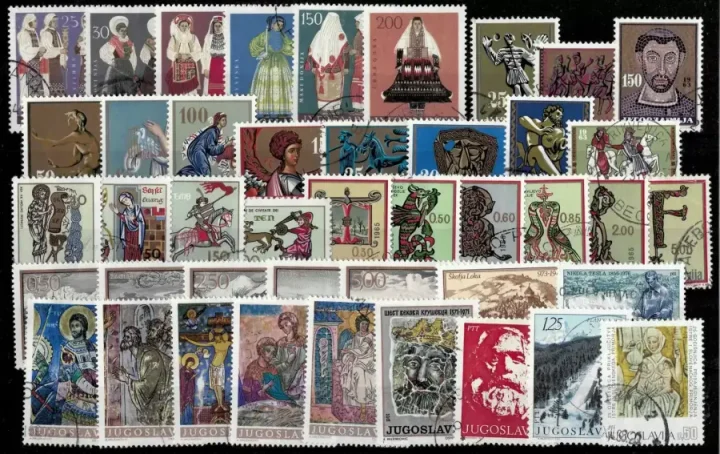
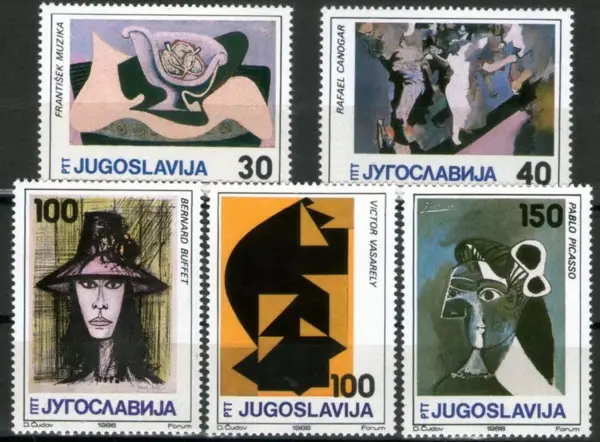
Yugoslavia stamps year 1950/65 Culture / Art
During the 1950s and early 1960s, Yugoslavia utilized its postage stamps as a primary tool for cultural diplomacy and national identity. This period is often called the “Golden Age” of Yugoslav Philately because the country moved away from Soviet-style “Socialist Realism” and began celebrating its own unique blend of Mediterranean, Central European, and Balkan heritage.
1. The “Yugoslav Art Through the Centuries” Series
The most iconic releases of this era were the multi-year series titled “Art in History” (or Umetnost kroz vekove). These sets were known for their high-quality photogravure and engraving.
- 1956 Art Series: A landmark set featuring famous frescoes, sculptures, and architectural details from across the six republics. Key depictions included the White Angel fresco from the Mileševa monastery.
- 1961 Sculptures: A specialized series focusing on modern and historical sculptures, showcasing works by the world-renowned Ivan Meštrović.
- 1963-1964 “Art in History”: Continued the tradition by featuring medieval jewelry, illuminated manuscripts, and Byzantine icons.
2. Famous Figures of Culture (Scientists, Writers, Artists)
Yugoslavia frequently honored its intellectual giants to emphasize its contribution to global progress.
| Year | Theme / Person | Significance |
| 1950 | Petar II Petrović-Njegoš | Commemorated the great Montenegrin poet and philosopher. |
| 1956 | Nikola Tesla Centenary | A major set honoring the inventor, released for his 100th birthday. |
| 1957 | Famous People | Included Stevan Mokranjac (composer) and Jovan Sterija Popović (playwright). |
| 1965 | Famous Cultural Figures | A 6-stamp set featuring artists like Đura Jakšić and Paja Jovanović. |
3. Folklore and Traditional Costumes
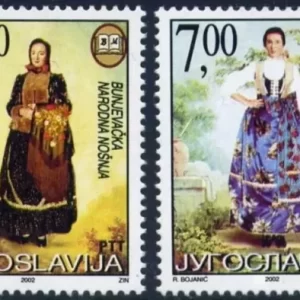
In 1964, Yugoslavia issued a popular series of 6 stamps depicting the traditional folk costumes of the various regions (Serbia, Croatia, Slovenia, Bosnia, Montenegro, and Macedonia). These were highly colorful and used to promote tourism and internal cultural unity.
4. Collector’s Guide: 1950–1965
If you are looking for these specific years in a catalog (like Michel, Scott, or Yvert), keep an eye out for these characteristics:
- Printing: Transitioned from monochromatic recess printing (late 40s) to vibrant multicolor offset and photogravure by the early 60s.
- The “Tito” Influence: While cultural stamps were common, you will find that “Art and Culture” sets often alternate with the “Definitives” featuring President Tito’s profile or industrial progress.
- Paper/Watermarks: Most issues from this period do not have watermarks, which was a shift from early Kingdom-era stamps.


Reviews
There are no reviews yet.