
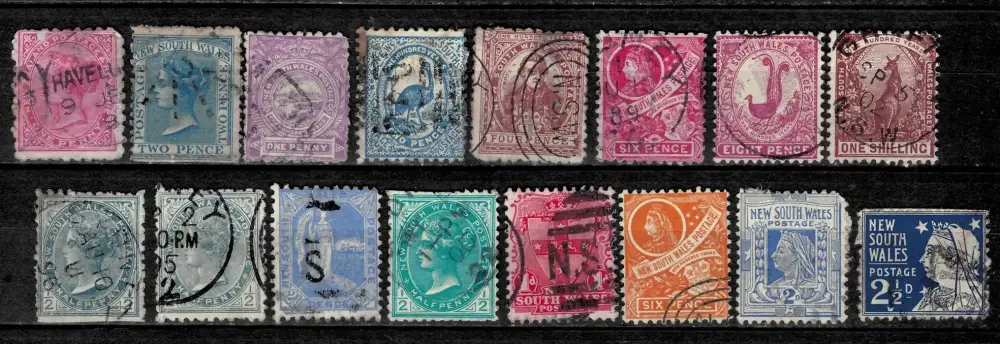


New South Wales year 1862 -1910 stamps Used lot
Between 1862 and 1910, the colony of New South Wales (NSW) produced some of the most historic and visually diverse stamps in the British Empire. This period saw the transition from classic “Diadem” designs to the world’s first commemorative stamps and, finally, the transition to Australian Commonwealth issues.
1. The “De La Rue” & Diadem Era (1862–1887)
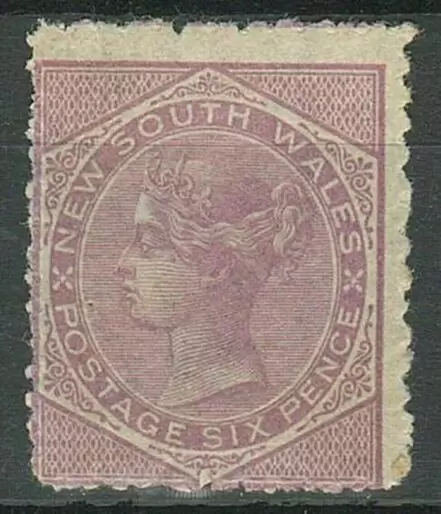
Following the early “Sydney Views” and “Laureates,” NSW settled into more standardized designs, many printed by the famous London firm De La Rue.
- Small & Large Diadems: The “Diadem” refers to the specific jeweled crown worn by Queen Victoria. The 1d, 2d, and 3d values are very common from this era, typically found in shades of red, blue, and green.
- The 5s “Coin” Design (1861–1897): A standout high-value stamp that resembles a large circular medallion or coin. It is often found in shades of violet or purple and is a favorite among “classic” collectors.
- Registration Stamps: Until the late 1860s, NSW used distinct bicolored stamps (typically red and blue) specifically for registered mail.
2. The 1888 Centenary Series (The World’s First Commemoratives)
To celebrate 100 years since the arrival of the First Fleet, NSW issued a set of eight stamps in 1888. These are internationally famous as the first true commemorative postage stamps in the world.
| Value | Motif | Significance |
| 1d | View of Sydney | Shows the harbor and city skyline. |
| 2d | Emu | One of the first appearances of native fauna on a stamp. |
| 4d | Captain Cook | Honors the explorer’s 1770 voyage. |
| 8d | Lyrebird | A beautiful depiction of the native bird. |
| 1s | Kangaroo | The iconic Australian marsupial. |
| 5s | Map of Australia | An early geographic representation of the continent. |
| 20s | Governors Phillip & Carrington | Features the first and then-current governors. |
3. The Diamond Jubilee “Charity” Issues (1897)
In 1897, NSW issued two high-premium stamps to celebrate Queen Victoria’s Diamond Jubilee. These are known as “Semi-Postals” because they were sold at a price far above their face value to raise money for a “Consumptive Home” (tuberculosis hospital).
- 1d (sold for 1 shilling): Features an angel and a weary figure.
- 2½d (sold for 2s 6d): Known as the “Restoration” design, depicting the strong leading the weak.
4. The Commonwealth Transition (1901–1910)
After the Federation of Australia in 1901, the individual colonies continued to issue their own stamps for a decade.
- 1903 “Commonwealth” 9d: A unique two-color stamp (brown and blue) inscribed “COMMONWEALTH” that lists the initials of all the Australian states.
- 1905–1910 Issues: Existing NSW designs were reprinted on new paper with the “Crown over A” (Australia) watermark, signaling the move toward a unified national postal system.
Key Collector Notes
- Watermarks: NSW stamps of this era are heavily categorized by watermarks (e.g., “Crown over NSW” vs. “Crown over A”).
- Perforations: Varieties in perforation (the size and number of holes) can significantly change the value of otherwise identical-looking stamps.
- “OS” Overprints: You will frequently find these stamps with “OS” (On Service) perforated through them or overprinted. These were for official government use.
Reviews
There are no reviews yet.