
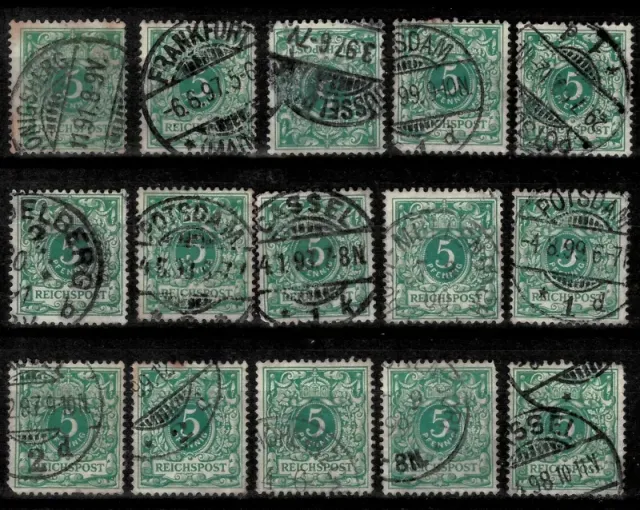
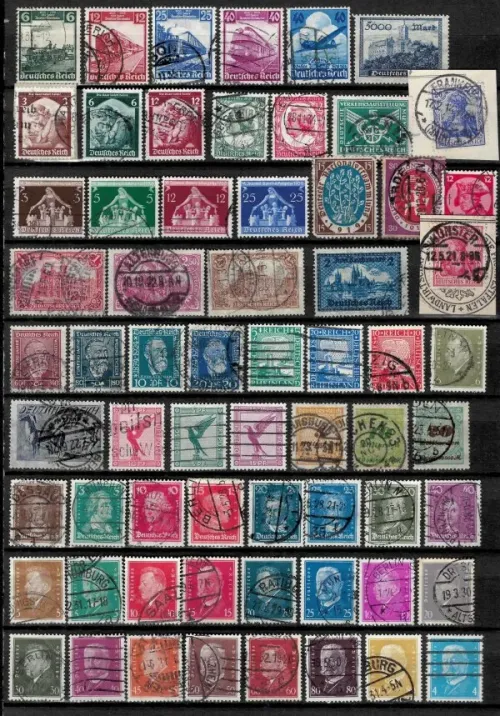
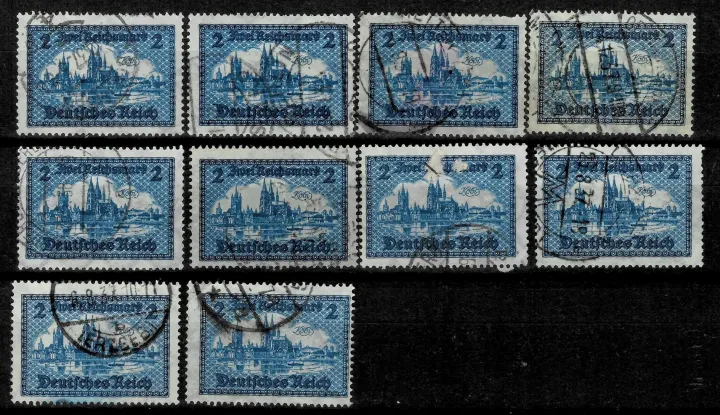
German empire year 1889 “Reich Post” 5pfg Used postage stamps
In 1889, the German Empire (Deutsches Reich) introduced a new definitive series known to collectors as the “Crown and Eagle” issue. The 5 Pfennig stamp is one of the most recognizable of this era.
🔍 Stamp Identification
- Series: Crown and Eagle (Krone/Adler).
- Inscription: “REICHSPOST” (curved at the top).
- Design: Features the Imperial Crown above the Imperial Eagle within an ornamental frame.
- Color: Green (shades vary from light green to dark blue-green).
- Catalog Numbers: Michel Nr. 46; Scott #46.
- Perforation: $13.5 \times 14.25$
💰 Market Value (Used)
Because these stamps were the standard rate for postcards at the time, they were printed in the millions. A standard used copy is very common.
| Condition | Estimated Value |
| Standard Used | €0.50 – €2.00 ($0.55 – $2.20 USD) |
| With Rare Cancellation | €10.00 – €50.00+ |
| On Full Postcard (1889) | €5.00 – €15.00 |
Note on Varieties: There are color subtypes (46a, 46b, 46c) in the Michel catalog. The 46c (dark blue-green) is generally the most sought after among the standard shades and can carry a premium if certified by a BPP expert.
🧐 What to Look For
Since the stamp itself is common, the value is often in the “Postmark” (Cancellation) rather than the stamp:
- Town Cancellations: Collectors look for clear, readable strikes from small towns or specific districts.
- Mute Cancellations: “Silent” cancels (circles or bars without text) can sometimes be worth more.
- Marine/Colonial Use: Stamps used on German ships or in early German colonies (before they had their own specific stamps) are highly valuable.
- Plate Flaws: Look for breaks in the “R” of “REICHSPOST” or flaws in the eagle’s feathers, which are documented varieties (e.g., Michel 46 III or IV).
Reviews
There are no reviews yet.